
The action was taken under Section 69A of the Act that empowers the government to block any information generated, transmitted, received, stored or hosted in any computer resource in the interest of sovereignty and integrity of India, defence of India, security of the state, friendly relations with foreign states or public order or for preventing incitement to the commission of any cognisable offence.

The proposed new norms include deployment of technology-based automated tools or appropriate mechanisms for proactively identifying and removing or disabling public access to unlawful information or content, minister of state for electronics and IT Sanjay Dhotre said in a written reply to the Rajya Sabha on Thursday.

The announcement quells fears among some telcos that Chinese players might be banned from participating in 5G trials and roll outs.
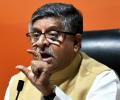
Ahead of the Union Cabinet expansion on Wednesday, several Union Ministers, including Health Minister Dr Harsh Vardhan, Education Minister Dr Ramesh Pokhriyal Nishank and Labour Minister Santosh Gangwar resigned from their posts.

Several factors have held India back. One is DoT policy somersaults and lack of clarity on whether to or not to ban Chinese gear makers.
The Bill says that the central government, in consultation with the Data Protection Authority, can direct any data fiduciary or data processor to provide non-personal data to enable better targeting of delivery of services. The government can also ask data processors to provide data for formulation of evidence-based policies for its own use.

Prime Minister Narendra Modi will retain DoPT, Atomic Energy as well as all important policy issues and portfolios not allocated.
 © 2026 Rediff.com - Advertise with us - Disclaimer - Privacy Policy - Sitemap - Feedback - About us - Terms of use - Grievances